A vignette is grounded in the evidence - immigration records, crew lists, newspapers, apprenticeship and hospital records - and uses informed interpretation, never invention, to bring a real moment to life. Here is one built from the records of David Winders.
It is April 13, 1855. The Rose of Sharon, a battered immigrant ship, limps around Sydney Heads. Her mainmast is gone, her topmasts splintered, her rudder cracked and barely holding. The timbers groan, the rigging hangs limp. She’s survived - but only just.
The wind has dropped. A few of the 365 weary passengers - new immigrants - begin to creep out onto the deck. One woman clutches her child and whispers: “Thank God.” Then, glancing at a crewman limping past, “And thank you, David.”
David Winders doesn’t answer. Nineteen years old, his leg aching from an old injury, he just gives a faint nod and ties off the line in his hand. He looks up. Seagulls wheel overhead. The sunlight is warm and bright, very bright. Somewhere in the breeze is the strange smell of eucalyptus. And Sydney rises ahead through the swell.
But David isn’t thinking about landfall. Not yet. He’s thinking about Alexander.
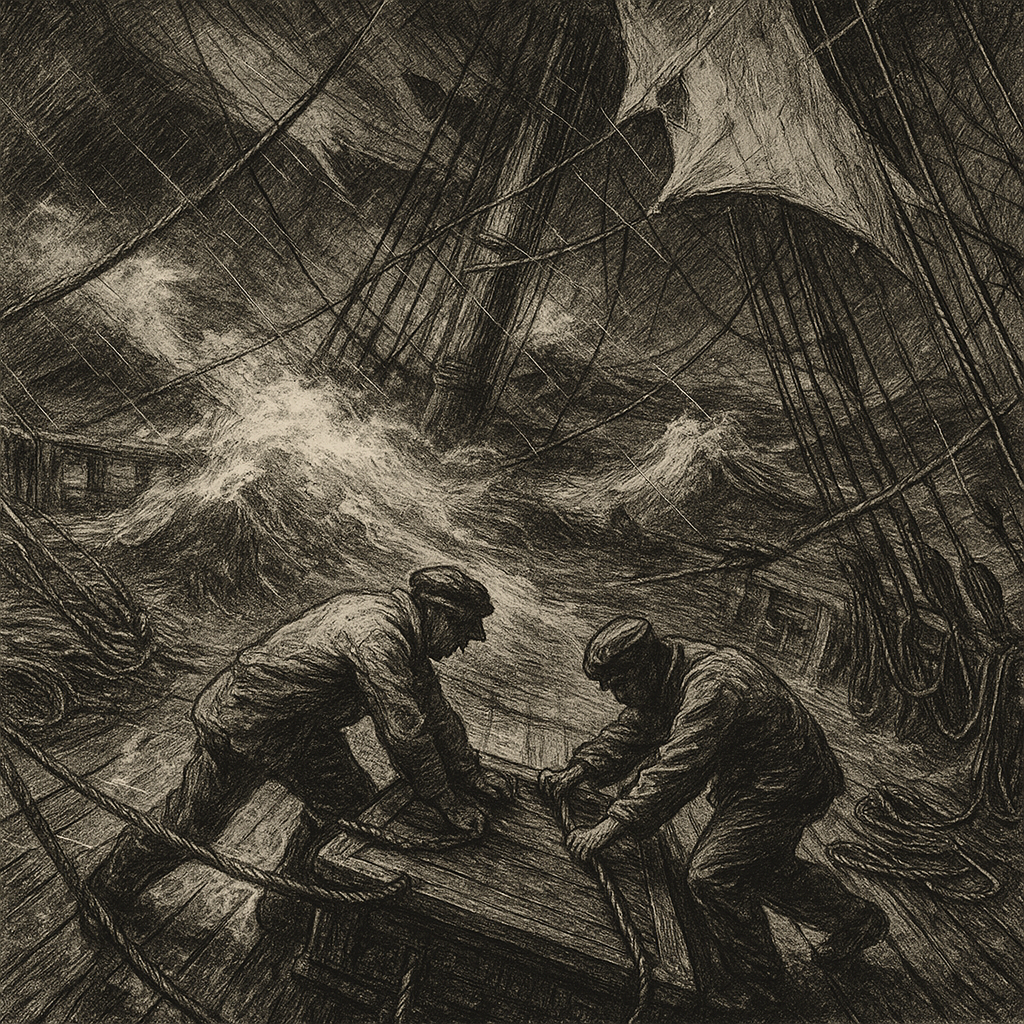
A few weeks earlier, in the middle of the Southern Ocean - 600 miles south of Australia - the ship had been struck by a hurricane. The mainmast torn away. Topgallants gone. The rudder nearly useless. And worst of all, the carpenter, Alexander Maxwell - gone overboard in a flash. Swept away.
David had been beside him. They were trying to close the hatches. David couldn’t swim. Not a stroke. But he held his ground, got the last hatch shut, and clung to the rigging through the storm. Someone found him at dawn, barely conscious, tangled beneath a tarp and a mess of ropes.
He’s not getting back on that ship.
His first voyage at fifteen - an apprentice aboard a coal ship between London and Newcastle - had ended with a shattered thigh and a hospital discharge. He signed on again, this time as an Ordinary Seaman. Only to live through this.
He doesn’t say a word. Just stands at the rail, watching Colonial Sydney grow larger with every gentle roll of the ship.
This time, he’s done. He’s not getting back on that ship.
This vignette is based on immigration records and crew lists, newspaper articles, apprenticeship and hospital records. Merchant navy medical records show David suffered a very badly broken leg on an earlier voyage - the old injury that still ached as he rounded the Heads. He couldn’t swim - and as recorded in his inquest, he later drowned while bathing in a disused, water-filled quarry.